July 26, 2026
Bagged vs. Bagless Vacuums: Which Actually Traps More Allergens?
Written by Kiran Kazim
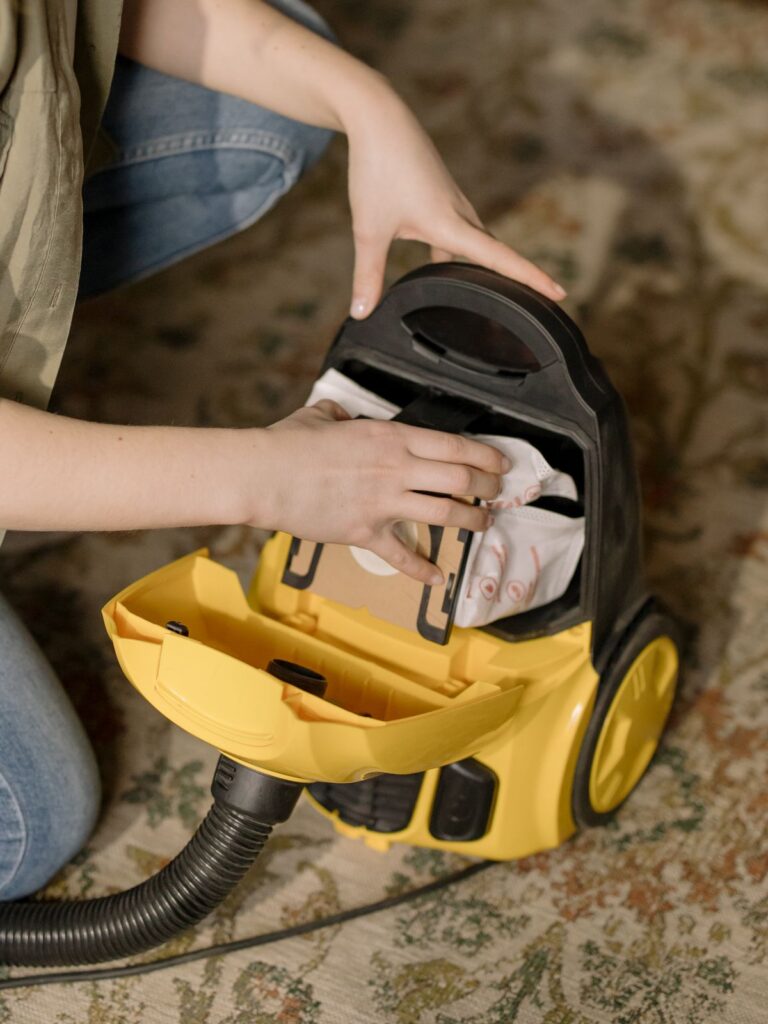
This is the question I get asked most often, and it’s usually framed as a simple either/or. It isn’t, quite. Both formats can be excellent or genuinely bad for allergy sufferers depending on how they’re built, not just which category they fall into. But if you’re choosing between two otherwise similar machines and allergens are your priority, there is a real, physical reason to lean one way.
What actually happens at the moment of emptying
The difference that matters isn’t storage capacity or running cost, it’s what happens the moment you deal with what the vacuum has collected.
A bagged vacuum stays closed. You pull out a sealed paper or fabric bag, and the dust inside never has to touch open air on its way to the bin. The bag itself acts as an additional layer of filtration while the vacuum is running, which is part of why many bagged machines handle fine dust well even before you factor in whatever primary filter they use.
Free checklist
Get Kiran's Free Fine Dust & Allergen Vacuum Checklist
Built after my son's asthma diagnosis, this is the exact five minute process I use before recommending any vacuum.
- HEPA seal red flags
- My five minute home test
- Proper bin emptying technique
- Questions to ask before buying
A bagless vacuum has to be opened. Whatever’s sitting in that clear plastic canister — dust, dander, hair, dust mite debris — is exposed to the room the second you release the catch. For someone without allergies, that’s a non-issue. For someone who’s vacuuming specifically to reduce airborne allergens, it’s the exact moment the whole exercise can backfire.
Why this matters more than the marketing suggests
Bagless vacuums are marketed heavily on convenience and running cost, and both of those claims are usually true. No repeat purchase of bags, and you can see exactly how much you’ve collected. What doesn’t make it onto the box is that “how much you’ve collected” includes fine particulate matter that’s about to become airborne again the moment you tip the bin.
I’ve watched this happen in real time during testing: vacuum a small pile of fine dust on a dark floor, then open the bin over a light surface. On a well-sealed bagless machine with a good filter, you might see very little escape. On a poorly designed one, you get a visible puff. Either way, you’re handling that moment yourself, which a bagged system removes from the equation entirely.
Where bagless machines can still work well for allergies
I don’t think bagged is automatically the right answer for every household, and it would be dishonest to say otherwise. A bagless vacuum can be a genuinely good choice for allergy-sensitive homes if a few things are true:
- It has a properly sealed system, not just a HEPA filter sitting inside a leaky body. See our full explainer on what a sealed system actually means if you haven’t already.
- You empty it outdoors, slowly, rather than fast over an indoor bin. Speed is what launches fine dust into the air; a slow, controlled tip contains far more of it.
- You’re willing to wear a mask the first few times you empty a new machine, until you’ve confirmed how “clean” that specific model actually empties in practice, since this varies significantly between models even within the same brand.
If you’re not willing to do any of that consistently, a bagged vacuum removes the need to think about it at all, which is worth something on its own.
The case for bagged vacuums beyond just emptying
There’s a second reason bagged systems tend to perform well for allergy sufferers, and it’s less obvious. The bag itself is usually made from multiple layers of porous material designed to trap particles as air passes through, acting as a pre-filter before air ever reaches the vacuum’s main filter. That two-stage process, bag then filter, is part of why bagged vacuums have historically had a reputation for strong allergen control, independent of whatever HEPA rating the machine advertises.
The trade-off is ongoing cost and the mild inconvenience of needing to keep the right bags in stock. For most allergy-focused households I’ve spoken to, that’s a fair exchange for not having to think about emptying technique.
A common myth worth clearing up
I hear a version of this a lot: “bagless is worse because the bag traps dust and bagless doesn’t have one.” That’s not quite right, and it’s worth being precise about why. A bagless vacuum still has a filter, sometimes several, doing the same fundamental job a bag does — catching particles before exhaust air leaves the machine. The bag isn’t the only thing standing between dust and your lungs; it’s an additional stage that happens to also solve the emptying problem for you.
Put another way: a badly sealed bagged vacuum can still leak, and a well-sealed bagless vacuum with a genuine HEPA filter can perform very well. The format is a strong predictor of allergen exposure at the emptying stage specifically, not a guarantee of overall filtration quality. That’s why I keep coming back to the sealed-system question — it’s the variable that actually determines performance, and bag versus bagless is really a question about your own routine and risk tolerance around one specific moment in the cleaning process.
What I actually recommend
If someone in your home has asthma, a dust mite allergy, or a general respiratory sensitivity, and you don’t want to have to think carefully every time you empty the vacuum, a bagged system is the lower-effort, lower-risk choice. If you’d rather avoid the ongoing cost of bags and are willing to be deliberate about how and where you empty the bin, a well-sealed bagless vacuum can perform just as well — the responsibility just shifts from the machine’s design to your own routine.
Either way, don’t let the bagged-versus-bagless decision distract from the more important question underneath it: is the system actually sealed, and does the filter meet a real standard rather than a marketing one? That’s the check that matters most, regardless of which format you choose.
For the complete checklist — bag format plus everything else worth checking — see our full guide to choosing a vacuum for asthma. And regardless of allergies, the two formats also differ in ongoing maintenance time and cost — see bag vs bagless: the real maintenance time difference.