July 26, 2026
What Is a Sealed System Vacuum? Why It Matters for Allergies
Written by Kiran Kazim
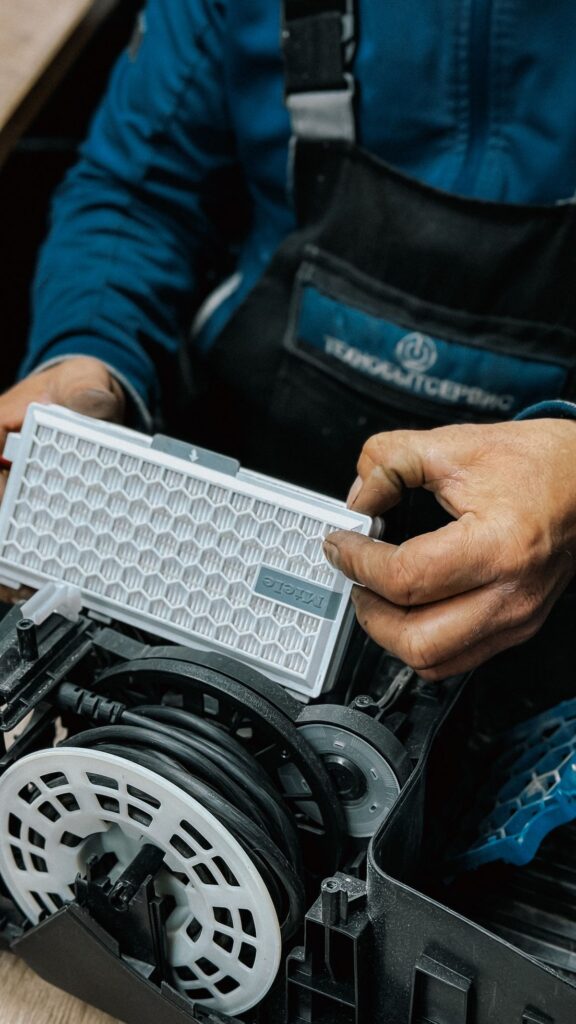
When my son was five months old, I thought filtration meant one thing: buy a vacuum with a HEPA filter, and the dust problem was solved. I was wrong, and it took an emergency room visit to find that out. The vacuum we owned at the time had a HEPA filter. It also, as I later learned, had nowhere near the seal needed to make that filter do anything useful.
This is the single most misunderstood thing about vacuum filtration, and it’s the first thing I check on any machine before it goes anywhere near my house.
A HEPA filter is only as good as the seal around it
A True HEPA filter, properly rated, can trap 99.97% of particles down to 0.3 microns. That statistic gets printed on boxes constantly, and it’s genuinely impressive when it’s accurate. But it only means anything if all the air passing through the vacuum is forced through that filter. (Not every filter labeled “HEPA” actually meets that bar — see our breakdown of what the H-number ratings actually mean.)
Free checklist
Get Kiran's Free Fine Dust & Allergen Vacuum Checklist
Built after my son's asthma diagnosis, this is the exact five minute process I use before recommending any vacuum.
- HEPA seal red flags
- My five minute home test
- Proper bin emptying technique
- Questions to ask before buying
A “sealed system” means the entire body of the vacuum, not just the filter compartment, is airtight enough that air can’t sneak past the filter through gaps in the casing, the bin seal, or the joints between components. If the seal isn’t there, air takes the path of least resistance around the filter instead of through it, and every bit of fine dust in that air comes with it, straight back into your room.
In other words: a brilliant filter in a leaky body performs like no filter at all for a meaningful percentage of what it processes. This is the gap between what’s printed on the box and what actually happens in your living room, and it’s rarely mentioned in vacuum marketing because “sealed system” doesn’t sell as easily as a filtration percentage.
How to tell if a vacuum is actually sealed
Manufacturers don’t always state this clearly, and listings can be vague on purpose. A few things I look for before I trust a machine:
- The wording matters. “HEPA-type” or “HEPA-style” are not the same claim as “True HEPA” or “Sealed HEPA System.” The former is marketing language with no enforceable standard behind it. If a listing won’t commit to one of the real terms, that’s usually because it can’t.
- Look for the phrase “sealed system” or “sealed HEPA” specifically, not just “HEPA filter included.”
- Check whether the filter is washable or has a stated replacement interval. A vacuum built with filtration as a real design priority will tell you how to maintain it. If there’s no guidance at all, filtration probably wasn’t high on the list when it was designed.
None of that is foolproof on its own, which is why I don’t stop at reading the listing.
The five-minute test I run on every vacuum
This is the same process from our free checklist, but it’s worth explaining why each step works, not just what to do.
- Run the vacuum, then hold a clean tissue or dark cloth near the exhaust vent. If the seal is doing its job, nothing lands on it. Fine dust on the cloth means air is escaping the machine without passing through the filter at all — the clearest possible sign of a leak.
- Vacuum a small, deliberate pile of flour or fine dust on a dark floor, then check the surrounding area once you’re done. A genuinely sealed machine won’t leave a haze on the floor or in the air around where you were working. If it does, that dust escaped somewhere in the system before it ever reached the bin.
- Watch what happens when you open the bin. This is the step people skip, and it’s often the most revealing. A visible puff of dust on opening means the seal around the bin itself isn’t holding, even if the rest of the machine is fine. This matters daily, not just in testing — it’s the point where a “clean” vacuum can put fine dust straight back into the air of the room you just cleaned.
I run this on every vacuum before it gets anywhere near a recommendation on this site, described in more detail on our How We Test page.
Why this matters more for some households than others
If nobody in your home has asthma, allergies, or a respiratory sensitivity, a small filtration leak is unlikely to be something you’d ever notice. But if you’re vacuuming specifically because of allergens — pet dander, dust mite debris, fine construction dust, whatever brought you to this article — a leaky seal defeats the entire purpose of the exercise. You’re not removing the allergen from your home. You’re just moving it around and giving some of it a second chance to become airborne.
That distinction is the reason I test filtration the way I do. Vacuuming should reduce what’s in the air you breathe, not just relocate it from the carpet to somewhere less visible.
A note on independent verification
Manufacturer filtration claims aren’t independently policed the way medical device claims are. In the UK, organisations like Asthma + Lung UK publish general guidance on reducing airborne allergens at home, and it’s worth reading alongside any vacuum’s marketing copy, since it isn’t trying to sell you anything. If a product claim about allergen reduction seems to go further than what that kind of independent guidance would support, that’s a reasonable moment to be sceptical.
The takeaway
A high filtration percentage on the box tells you almost nothing on its own. Ask whether the system is actually sealed, check the wording, and if you’re not sure, run the five-minute test yourself before you commit to a machine long-term. It’s a small amount of effort that tells you more than any spec sheet will.
If you’re also weighing up format, our bagged versus bagless breakdown covers the other major decision that affects how much allergen exposure happens in your own home, not just inside the machine.
For the fuller picture of what to check before buying — seal integrity plus everything else that matters when someone in your home has asthma — see our full guide to choosing a vacuum for asthma.