Best Vacuum for Cat Litter: Robot, Cordless and Handheld Picks That Won’t Clog

Disclosure: As an Amazon Associate, TheVacuumHub earns from qualifying purchases. If you buy through links on this page, we may earn a commission at no extra cost to you. How we make money.
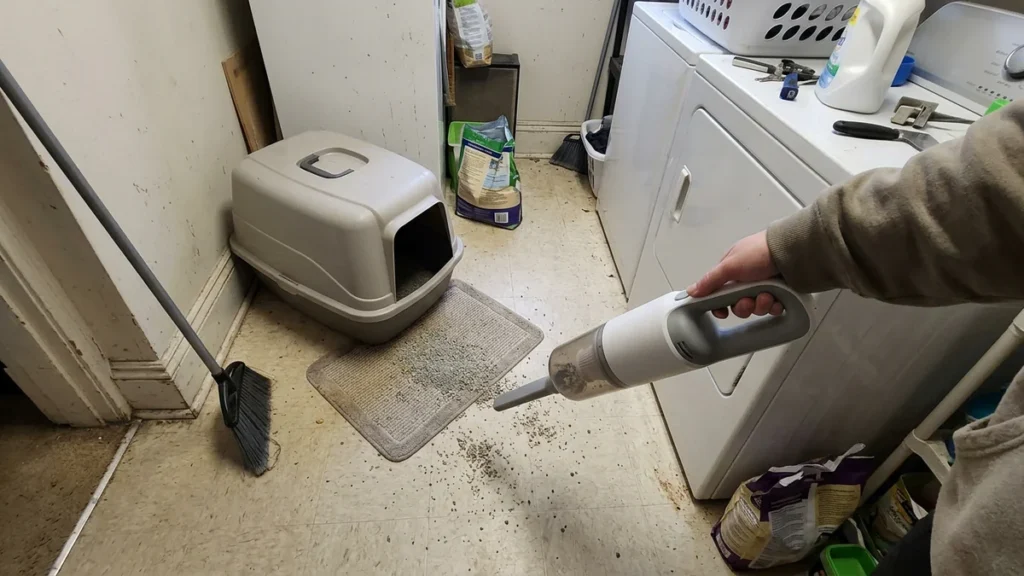
You know the feeling. You walk past the litter box in socks and hear that crunch. Then you find litter in the hallway, under the bed and somehow in the kitchen. Picking it up is easy. Picking it up without clogging your vacuum or blowing litter dust around the room is the hard part. Let me walk you through what actually works, and which vacuums are built for it.
What is the best vacuum for cat litter? The best vacuum for cat litter has a sealed filter that traps fine litter dust, a rubber or tangle-free roller that won’t fling granules around, and a bin that’s easy to empty. A robot vacuum handles daily tracking, and a small handheld is best for the box area itself.
Key takeaways:
- Sealed filtration matters more than raw suction. Litter dust is fine enough to slip past cheap filters.
- Never vacuum wet or clumped litter. It turns to paste and blocks the hose.
- Two tools beat one: a robot or stick for the house, and a handheld for the box.
Why it matters: About 53 million US households have a cat, according to the American Pet Products Association’s 2025 survey (APPA data via Pet Food Industry). That’s a lot of homes dealing with litter tracking every day.
At a glance: my top picks
| Pick | Model | Best for | |
|---|---|---|---|
| Best overall | Dyson V15 Detect | Hard floors, rugs, litter dust | Check price |
| Best robot | Roborock S8 MaxV Ultra | Daily tracking across the house | Check price |
| Robot with HEPA base | Shark AI Ultra (AV2501AE) | Dusty clay litter, allergies | Check price |
| Best budget | Shark Navigator NV352 | Carpeted homes | Check price |
Best overall vacuum for cat litter and hair
Dyson V15 Detect
Why I like it
- Up to 60 min run time on the lowest setting (Dyson)
- Laser head lights up fine dust on hard floors
- Dyson says it traps 99.99% of particles down to 0.1 microns
- Click-in battery you can swap, and it works as a handheld
What to know
- Expensive
- Small bin, so you’ll empty it often
- Run time drops a lot on boost
A powerful cordless stick that shows you the dust it’s picking up. Best for: Homes with cats and mostly hard floors, plus some rugs.
Research pick, not hands-on tested yet. Prices change, so check the current price on Amazon.
Best robot vacuum for cat litter
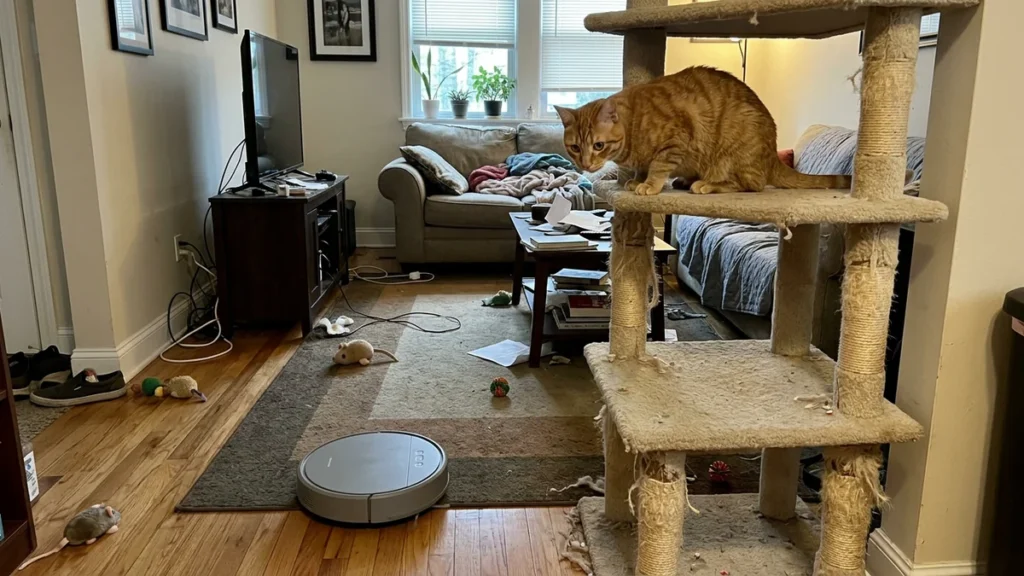
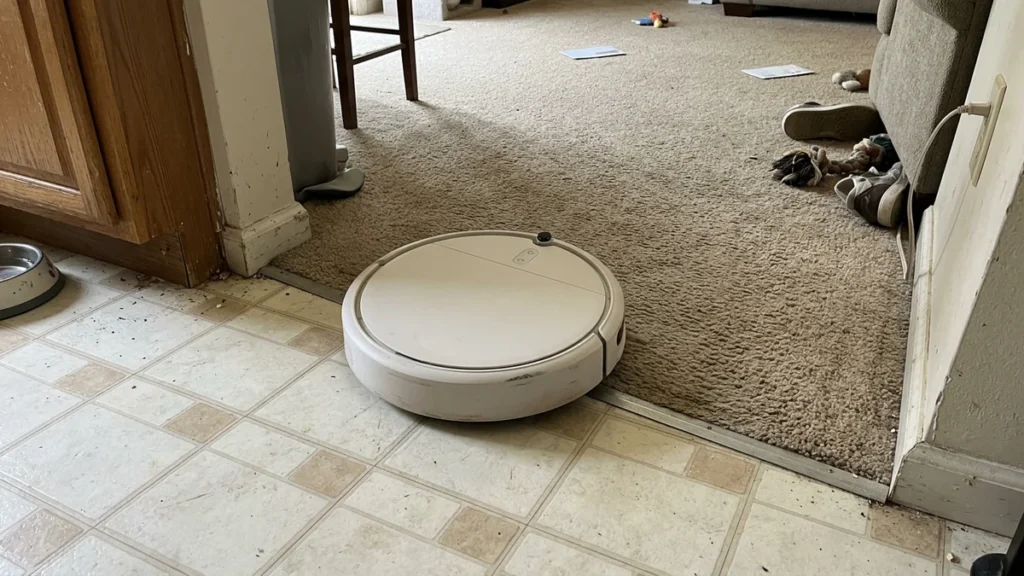
Will a robot vacuum pick up cat litter? Yes. A robot with strong suction and rubber rollers does a great job on daily litter tracking, because it cleans the same paths every day before litter spreads through the house.
Roborock S8 MaxV Ultra
Why I like it
- Dual rubber rollers grab granules instead of flicking them
- Rubber resists cat hair tangles
- Self-emptying dock keeps it running
What to know
- Premium price
- Set a no-go zone around the litter box
A premium robot with the feature that matters most for litter: rubber rollers. Best for: Daily tracking across the whole house.
Research pick, not hands-on tested yet. Prices change, so check the current price on Amazon.
Shark AI Ultra with XL HEPA Self-Empty Base (AV2501AE)
Why I like it
- HEPA filter in the self-empty base
- Empties itself, so a full bin doesn’t stop it
- Usually cheaper than premium robots
What to know
- Shark updates this line often, so check the current model
A robot whose self-empty base has a HEPA filter, so litter dust stays trapped. Best for: Allergy-prone homes and dusty clay litter.
Research pick, not hands-on tested yet. Prices change, so check the current price on Amazon.
Best handheld vacuum for cat litter
The best handheld vacuum for cat litter is a small cordless one with a washable filter that lives right next to the box. It handles the daily scatter in seconds and keeps the heaviest litter dust out of your main vacuum.
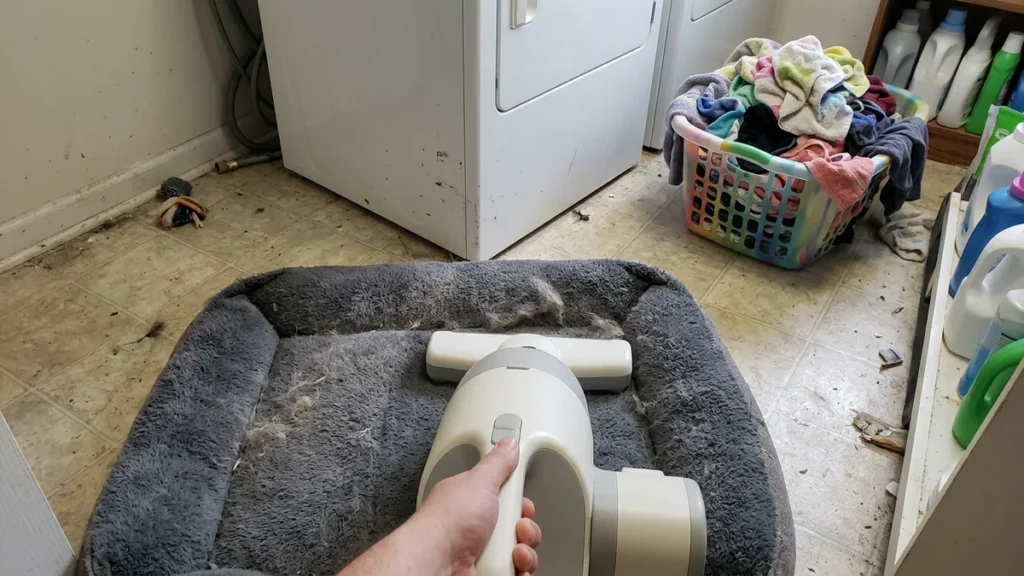
Look for these three things:
- A washable filter, because litter dust clogs it fast and you’ll rinse it often
- A wide nozzle to scoop granules off a mat in one pass
- A bin that opens over the trash without you touching the dust
See handheld vacuums on Amazon
Best cordless vacuum for cat litter
A cordless stick is the best choice when litter travels beyond the laundry room into hallways and bedrooms. It’s light enough to grab every day, and you don’t have to drag a cord around the box. The Dyson V15 Detect above is my overall pick. If you want to spend less, look for a stick with a sealed filter and a soft roller head for hard floors. Our guide to the best cordless stick vacuums has more options.
Best vacuum for cat litter on hard floors vs carpet
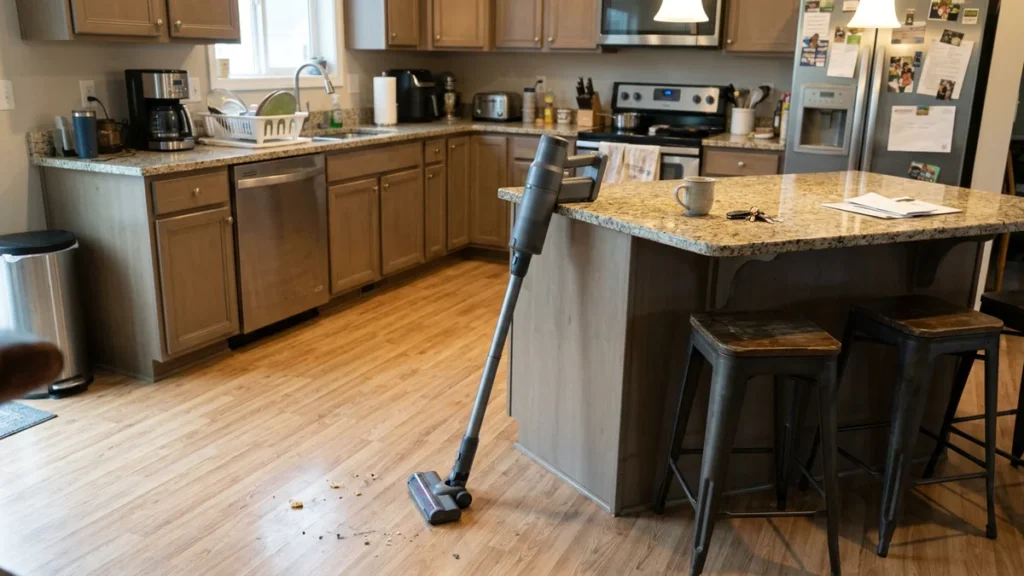
On hard floors, any vacuum with good suction picks up litter. The real goal is not scattering it, so use a soft roller or a rubber-bladed head. On carpet, litter sinks into the fibers, so you need a motorized brush roll and stronger suction.
Shark Navigator Lift-Away NV352
Why I like it
- HEPA filter with a sealed design
- Pod lifts off for stairs and the litter area
- Corded, so it never runs out of power
- Budget price and washable foam and felt filters
What to know
- Roughly 13 to 14 lb, heavier than a stick
- You need an outlet nearby
A budget corded upright with a sealed HEPA system and a pod you can carry. Best for: Carpeted homes on a budget.
Research pick, not hands-on tested yet. Prices change, so check the current price on Amazon.
A litter mat helps more than any vacuum. A textured mat under the box catches most granules before they leave. See litter mats on Amazon.
Is cat litter bad for vacuums?
Cat litter can be hard on a vacuum, mostly because of the fine dust, not the granules. Here’s what actually causes the damage, and how to avoid it.
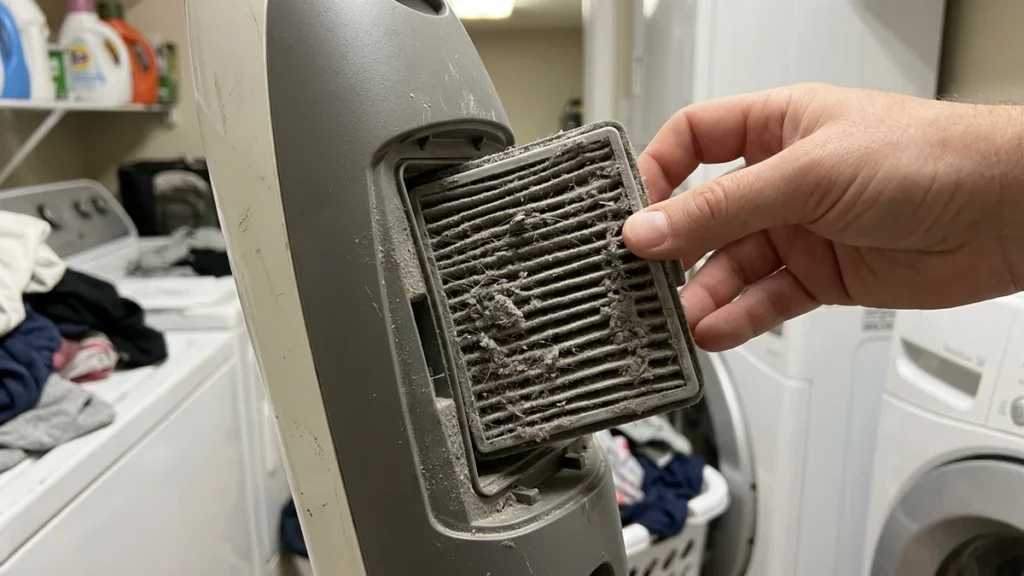
Fine litter dust clogs filters fast
Clay litter breaks down into a fine gray dust. That dust coats the filter, airflow drops, and the motor works harder and runs hotter. Tap out or rinse the filter more often than the manual says if you vacuum litter daily. Here are the signs your filter is overdue for a change.
Wet or clumped litter turns to paste
Never vacuum wet litter or clumps. Moisture plus clay makes a paste that sticks inside the hose and bin and blocks airflow. Scoop clumps by hand first. If your vacuum already lost suction this way, our guide on why your vacuum is not sucking walks through the fix.
Light tracking vs a full spill
A few granules a day are fine for any vacuum. A tipped-over box is different. Treat them differently:
- Sweep and scoop first. A dustpan and small broom get the bulk up without loading your vacuum with heavy litter.
- Use a shop vac or wet/dry vacuum for big spills if you have one. They’re built for dense, gritty debris.
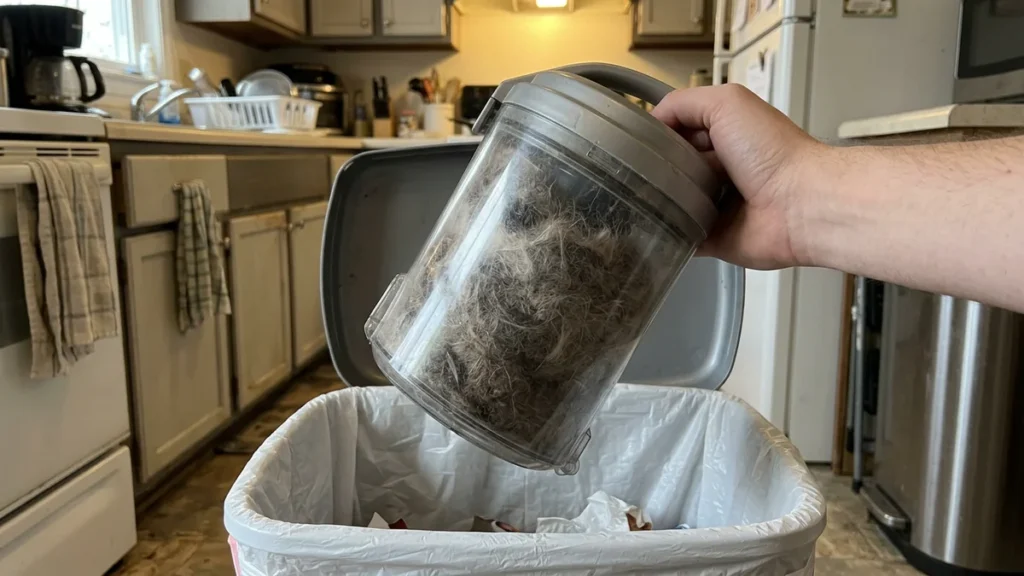
- Save your main vacuum for light tracking, and empty the bin right after so litter dust doesn’t sit in it.
Litter odor and your vacuum
Used litter can leave an ammonia smell in the bin and filter. Empty the bin outside after vacuuming near the box, rinse the bin when it smells, and let washable filters dry fully before you put them back. A damp filter holds odor and loses suction.
Why filtration matters for your lungs, too
A vacuum without a sealed filter can pick up the granules and blow the fine dust and cat allergens right back into the air. If anyone at home has allergies, a sealed HEPA system is worth paying for. Our explainer on HEPA filter ratings shows what to look for.
Buying guide: what to look for in a vacuum for cat litter
| Feature | Why it matters for litter |
|---|---|
| Sealed or HEPA filtration | Keeps fine litter dust and cat allergens inside the vacuum |
| Rubber or tangle-free roller | Grabs granules instead of flinging them, and resists cat hair |
| Easy-empty bin | You’ll empty it often, so it should open cleanly over the trash |
| Washable filter | Litter dust clogs filters quickly, so rinsing saves money |
| Self-empty base (robots) | A full bin of litter stops a robot. A base keeps it running |
If you’re also fighting cat hair, our guide to the best Shark vacuums for pets covers hair-specific features, and how often to vacuum with pets will help you set a routine.
FAQ
Is cat litter bad for vacuums?
It can be. Fine clay dust clogs filters fast, and damp or clumped litter can stick inside the hose and bin. Dry, loose litter is fine for most vacuums if you empty the bin often and keep the filter clean.
Can you vacuum cat litter?
Yes. Vacuum dry, loose litter only. Scoop up wet clumps by hand first, because they turn into paste inside the vacuum and can block the airflow.
Will a robot vacuum pick up cat litter?
Yes, a robot vacuum with strong suction and rubber rollers handles daily litter tracking well. Keep it away from the box itself with a no-go zone, and choose one with a self-empty base so the bin doesn’t overflow.
Is crystal litter worse for a vacuum than clay?
They’re hard on a vacuum in different ways. Clay makes more fine dust, which clogs filters. Crystal litter makes less dust, but the hard, sharp beads can rattle around and scratch a clear bin over time.
Should I use a separate vacuum just for cat litter?
If you have more than one cat, a small handheld kept near the box is worth it. It saves your main vacuum from daily litter dust and makes the quick cleanup so easy you’ll actually do it.