Robot Vacuum With HEPA Filter: What “HEPA” Really Means on a Robot

Disclosure: As an Amazon Associate, TheVacuumHub earns from qualifying purchases. If you buy through links on this page, we may earn a commission at no extra cost to you. How we make money.
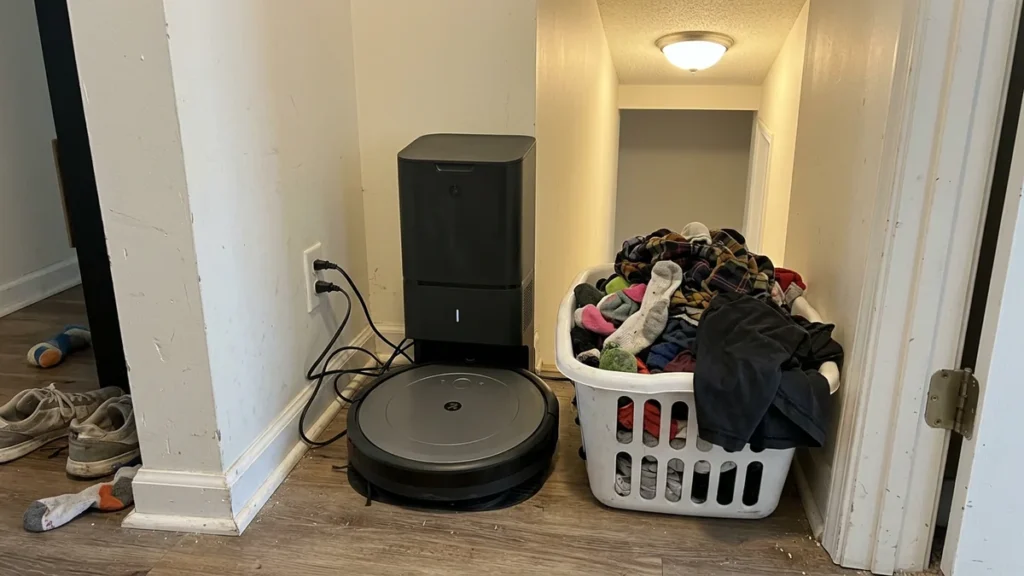
If someone at home has allergies, a HEPA filter is usually the first thing you look for. With robot vacuums, it gets confusing fast. One listing says HEPA, but the filter is in the dock. Another says HEPA, but it’s a washable “HEPA-style” filter. Let me walk you through what to actually check, so you get the filtration you’re paying for.
What is the best robot vacuum with a HEPA filter? Look for a HEPA filter in the self-empty base, which traps the dust when the robot empties itself, plus a sealed bin path. The Shark AI Ultra with XL HEPA Self-Empty Base is a good example. Be wary of “washable HEPA” claims, which aren’t the same as true HEPA.
Key takeaways:
- Check where the HEPA filter is: in the robot, the dock or both.
- True HEPA is rated to capture 99.97% of particles at 0.3 microns.
- A self-empty base with HEPA stops the dust cloud when the bin is emptied.
Why it matters: Americans spend about 90% of their time indoors, where some pollutants can be 2 to 5 times higher than outdoors (US EPA). For allergy homes, filtration matters as much as suction.
At a glance: my top picks
| Pick | Model | Best for | |
|---|---|---|---|
| HEPA base | Shark AI Ultra (AV2501AE) | Allergy homes on a budget | Check price |
| Premium | Roborock S8 MaxV Ultra | Mopping and rubber rollers | Check price |
HEPA vs washable HEPA vs HEPA-style
| Label | What it usually means |
|---|---|
| True HEPA | Rated to capture 99.97% of particles at 0.3 microns |
| HEPA in the base | The dock filters dust when the robot empties; the robot itself may not |
| Washable HEPA / HEPA-style | A fine filter, but not necessarily rated true HEPA |
Learn more in HEPA filter ratings explained.
Shark AI Ultra with XL HEPA Self-Empty Base (AV2501AE)
Why I like it
- HEPA filter in the self-empty base
- Empties itself, so a full bin doesn’t stop it
- Usually cheaper than premium robots
What to know
- Shark updates this line often, so check the current model
A robot whose self-empty base has a HEPA filter, so litter dust stays trapped. Best for: Allergy homes on a budget.
Research pick, not hands-on tested yet. Prices change, so check the current price on Amazon.
Roborock S8 MaxV Ultra
Why I like it
- Dual rubber rollers grab granules instead of flicking them
- Rubber resists cat hair tangles
- Self-emptying dock keeps it running
What to know
- Premium price
- Set a no-go zone around the litter box
A premium robot with the feature that matters most for litter: rubber rollers. Best for: Mopping, pet hair and hands-off cleaning.
Research pick, not hands-on tested yet. Prices change, so check the current price on Amazon.
Do robot vacuums help with allergies?
They can, by removing dust and pet hair every day before it builds up. They work best alongside a sealed HEPA upright or stick for deep cleaning. Read do robot vacuums help with allergies.
FAQ
Do robot vacuums have HEPA filters?
Some do, in the robot, the dock or both. Many use “HEPA-style” or washable filters that aren’t rated true HEPA, so check the spec sheet.
Is a HEPA filter in the base enough?
It helps a lot, because emptying is when dust escapes. A good filter in the robot too is better.
Are robot vacuums good for allergies?
As daily helpers, yes. Pair one with a sealed HEPA vacuum for deep cleaning.
How often should you replace a robot’s HEPA filter?
Follow the maker’s schedule, often every few months. Replace it sooner in pet homes.